
Reviewed · COMMUNIST HISTORY TOURS
Communist Budapest Private Walking Tour
Budapest’s communist past comes into focus through places that still shape the city: Parliament and Liberty Square, the former People’s Stadium, Bem József Square, and the old secret-service headquarters now known as the House of Terror. This private walk connects public monuments with the politics behind them, including the 1956 uprising and the Cold War.
I like the private format, since your guide can adjust the conversation to your interests. I also like the mix of grand political sites and everyday clues, such as the 1970s housing estate and a coffeehouse with its 1960s interior. The main drawback is that the tour lasts about three hours but includes several public-transport connections, so it is not a nonstop walking route.
Key points to know
- See the places where the 1956 Revolution began: Bem József Square and Kossuth Square give the political story a physical setting.
- Use Budapest’s public transport with a guide: Metro and tram tickets are not included, but your guide can help you buy them.
- Expect serious Cold War history: The route covers Soviet power, secret police, propaganda, the Iron Curtain, and daily shortages.
- Finish outside the House of Terror: The museum admission is not included, but the location makes a useful next stop.
- Choose a private morning or afternoon departure: Pickup from a central hotel or flat is offered.
- Check the group-size details before booking: The information gives different limits, including up to 10, 8, and 6 people.
Budapest’s communist story begins in public squares
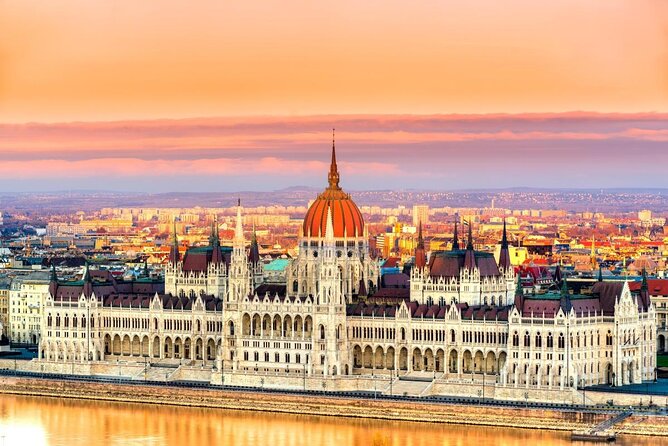
This is not a tour that treats communism as a distant political label. It places you in the squares where people protested, in front of monuments built to shape public memory, and beside buildings linked to state power.
Hungary’s communist period ran from 1949 to 1989. The guide explains how Soviet influence affected politics, public speech, housing, work, food, and family life. You also hear about goulash communism, Hungary’s less rigid but still controlled version of socialism, and the privations that came with it.
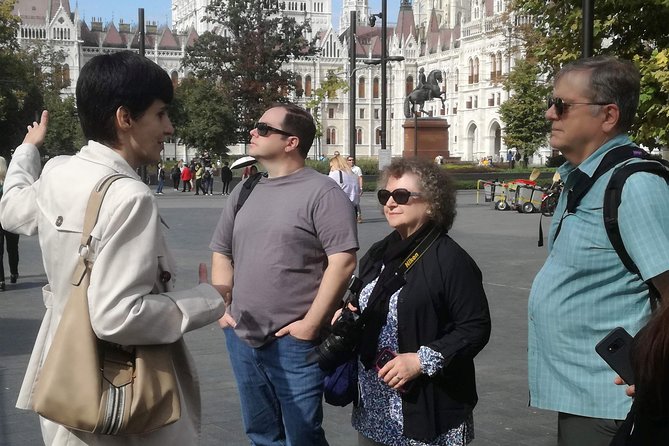
A private historian makes a real difference here. You can ask why a statue was placed in a certain square, how the 1956 uprising developed, or what ordinary life felt like under the regime. Andras has been praised for adjusting the route to match a group’s interests, while Kata brings clear explanations, humor, grace, and a broad world view to the discussion.
That personal approach is useful because Budapest’s communist history can quickly become a list of dates and political names. A good guide turns those facts into a readable story.
More communist history tours in Budapest:
- Budapest: Communist History Tour with House of Terror Option
★ 4.8 · 182 reviews - Budapest: 3-Hour Walking Tour About Communism (Small Group)
★ 4.7 · 70 reviews - Communism in Hungary with a Historian
★ 5.0 · 70 reviews
Parliament and Liberty Square: revolution, memory, and Cold War power
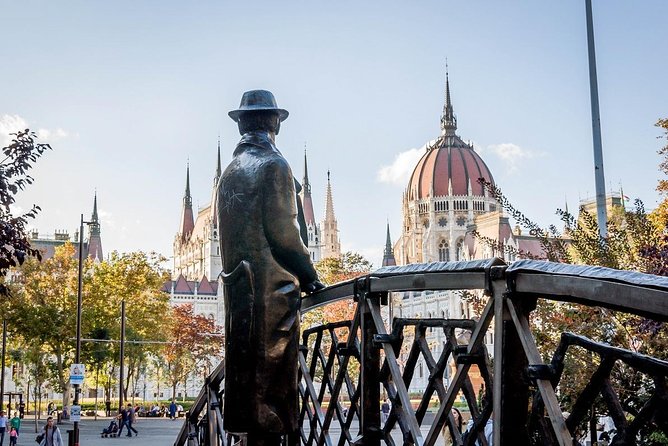
The tour begins with public transportation to Kossuth Square, directly in front of the Hungarian Parliament Building. The trip is part of the experience rather than an afterthought. If you do not have a Budapest transport pass, your guide helps you buy the metro or tram tickets you need.
Kossuth Square is an important opening because it links modern Hungarian government with the events of 1956. Here, your guide explores monuments connected with the revolution before moving on to Liberty Square.
The 1956 uprising was a national revolt against Soviet control and Hungary’s communist government. The square offers a way to discuss the courage, confusion, and danger of that moment without reducing it to a simple heroic tale. You learn how public demonstrations grew, how demands for change spread, and why Soviet intervention became the turning point.
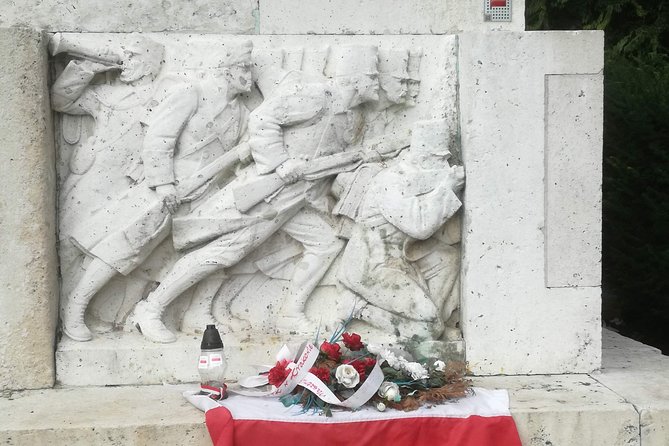
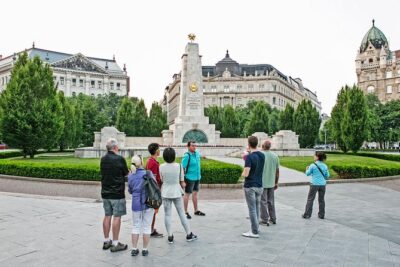
Liberty Square shifts the story toward the Cold War. In a compact area, your guide discusses the former Soviet presence, the US Embassy, and the monument to the Soviet Army. The juxtaposition is striking: one side recalls Soviet power, while another points toward the United States and the wider contest between East and West.
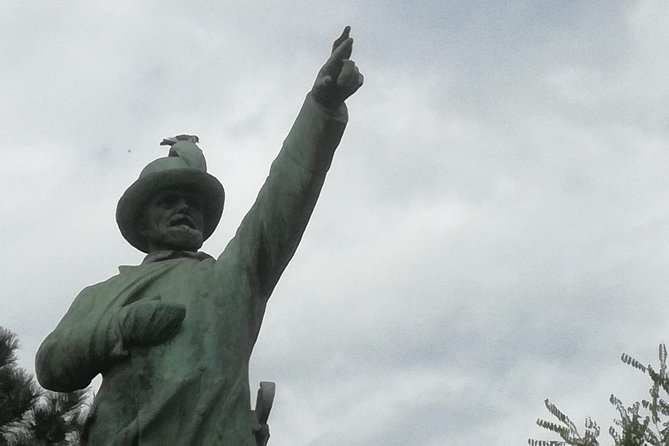
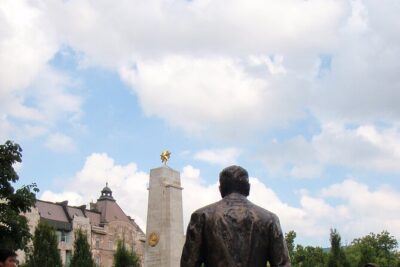
You also see the statue of Ronald Reagan. Hungary’s sense of gratitude toward Reagan comes from his role in challenging the Iron Curtain and supporting the political changes that eventually ended Soviet domination in Central Europe. The explanation is more useful than simply stopping for a photograph, since it shows how international politics and Hungarian memory meet in one Budapest square.
An atomic shelter is also part of the discussion. You do not enter it as part of the tour, but its presence adds a physical reminder of how the Cold War shaped public fears. These are the details that give the first section its weight.
The stop is listed at about 25 minutes. That is enough for an introduction and discussion, but not enough for every monument to receive a long examination. If you are especially interested in Cold War architecture or memorial politics, tell your guide at the beginning so the emphasis can match your priorities.
The House of Terror: a powerful ending, not an included museum visit
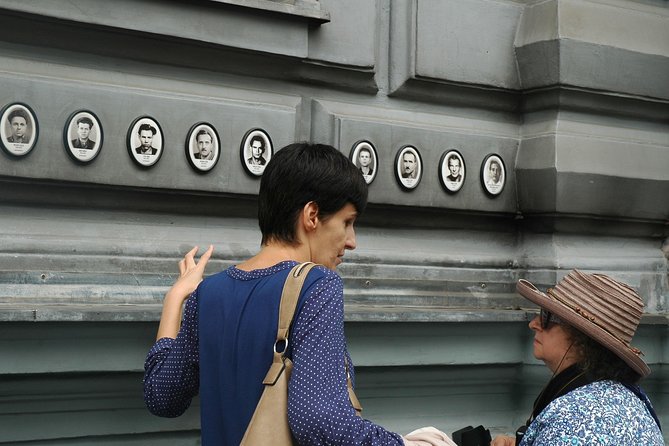
The tour finishes outside the House of Terror Museum on Andrássy Avenue. The building once served as the headquarters of Hungary’s communist secret services, and its grim associations make it a fitting end to a route about surveillance, repression, and political fear.
A section of the Berlin Wall sits in front of the museum. That piece of concrete helps connect Hungary’s experience to the wider division of Europe. It also gives you a clear option after the tour: enter the museum on your own if you want a more detailed presentation of the period.
Admission to the House of Terror is not included. This matters when planning your day, since the tour ends outside rather than taking you through the exhibits. The listed stop lasts about 15 minutes, so think of it as an exterior explanation and orientation, not a museum visit.
I like this arrangement for visitors who want historical context before entering the museum. You arrive with questions and a basic timeline instead of facing the exhibits cold. On the other hand, if you want the museum itself to be the main event, you need to allow extra time and buy admission separately.
Puskás Stadium and socialist realism in stone
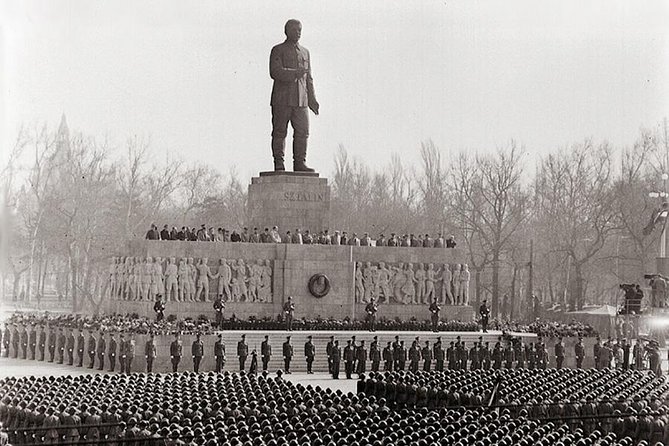
The route also passes the former People’s Stadium, now Puskás Soccer Stadium. The stadium is linked to the public spectacle of socialism, including the mass events and ceremonies that helped the regime project strength and unity.
The surviving socialist realist statues are the key feature here. Their athletic bodies and forceful poses show how official art presented the ideal citizen: strong, disciplined, productive, and loyal to the state. The point is not only that the statues look heavy-handed. Your guide explains how visual propaganda worked and why public buildings were decorated with this style.
The stop takes about 20 minutes and is free. It adds variety to the tour because the route is not limited to protest sites and government buildings. You see how ideology appeared in sports, public space, and the design of everyday institutions.
There is a practical limitation. The tour description does not promise entry into the stadium, so expect to examine the site from outside. That is enough for a discussion of the statues and propaganda, but football fans hoping for a stadium visit should not assume one is included.
More walking tours in Budapest:
- Budapest: Buda Castle Walk with Saint Stephen’s Hall
★ 4.5 · 3,012 reviews - Big Bus Budapest Hop-On Hop-Off Bus and Walking Tour
★ 3.5 · 2,206 reviews - Budapest: Buda Castle District Walking Tour
★ 4.6 · 2,108 reviews - Budapest City Landmarks Walking Tour in 2 Hours
★ 5.0 · 2,048 reviews
Bem József Square and the first large 1956 demonstration
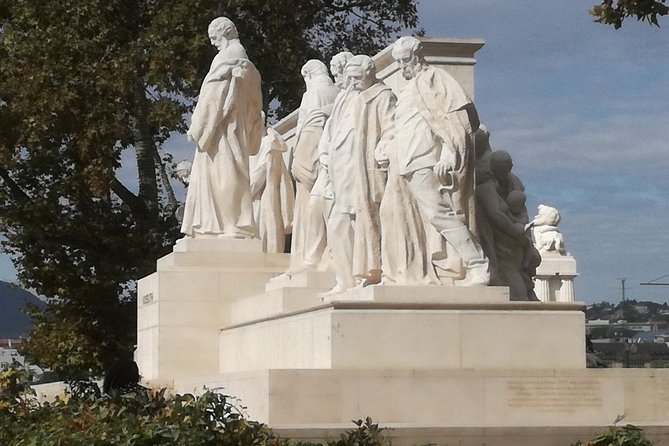
Bem József Square is one of the most important stops on the route. The first major demonstration of the 1956 uprising began here, making the square a natural place to discuss how resistance moved from private frustration into public action.
The square helps ground the history in a real urban setting. You can picture people gathering, carrying demands into the open, and testing how far the authorities would let public protest go. Your guide can also connect this event to the later developments you discussed at Parliament and Liberty Square.
A coffeehouse on the square has kept its original 1960s interior. That small detail matters. Political history often focuses on leaders and monuments, but an old café interior gives you a glimpse of the social world around the events. It suggests how people met, talked, waited, and carried on with ordinary routines during a tense period.
The stop lasts about 25 minutes. It is a good place to ask about daily life, not just revolution. What did people eat? How did shortages affect families? What did the government control? The tour’s discussion of goulash communism gains meaning here because the setting is not only political. It is also domestic and social.
What goulash communism means for your understanding of Hungary
The phrase goulash communism refers to Hungary’s comparatively softer version of socialism, especially when contrasted with more rigid systems elsewhere in the Eastern Bloc. That does not mean life was free or easy. The tour addresses shortages and privations, along with the limits placed on political expression and personal choice.
This is one of the strongest reasons to choose a historian-led walk rather than a general sightseeing route. You are not simply told that Hungary had communism. You learn how the system operated and how people adapted to it.
The subject can be uncomfortable, and the tour does not treat the period as a quirky collection of old statues. The secret police, Soviet power, revolution, propaganda, and food shortages all belong to the same story. The guide’s role is to connect them without flattening the experience into a simple good-versus-bad tale.
The private setting also lets you decide how much time to spend on political theory, family life, architecture, or international relations. Andras is described as kind and willing to shape the tour around a group’s interests. Kata is praised for explaining clearly while adding perspective and humor. Those qualities suit a subject that could otherwise feel heavy.
Three hours, public transport, and the value of a private guide
The experience lasts about three hours. Since the route crosses several parts of Budapest, you travel by metro, tram, or on foot when stops are close together. It is best understood as a guided city route with transport links, not a single continuous walk through one neighborhood.
The price is $393.17 per group. That can look high for three hours, but the cost covers a private historian for your group rather than a per-person ticket. With a larger party, the per-person price drops sharply. With only two people, the value depends on how much you want focused historical discussion and the freedom to ask questions.
There is conflicting information about the maximum group size. The tour is described at different points as serving up to 10 people, up to 8 travelers, and up to 6 people. Confirm the exact limit before booking, especially if your party is larger than six.
Pickup is offered from a central hotel or flat. Your guide leads you to the first sites and sends contact details, including a phone number and photo. If you do not arrange pickup or provide an address, meet at the default starting point on Frankel Leó út 2-4, 15 minutes before departure.
Morning and afternoon departures are available. An afternoon start could work well if you want to visit another attraction first, while a morning tour leaves the rest of the day open for the House of Terror or other museums.
Public-transport tickets are not included. Bring or buy the required metro and tram tickets, with help from your guide if needed. This is a small extra cost, but you should plan for it rather than assume all transportation is covered.
Who will get the most from this Budapest history tour
I would choose this tour if you want to understand Budapest beyond its imperial buildings, cafés, and river views. It suits people interested in modern European history, political change, architecture, memorials, and the way ordinary life is shaped by government.
It is also a good choice for families with older children or teenagers who ask serious questions. The private format lets you keep the pace and level of detail suitable for your group.
You may want something else if you prefer a relaxed sightseeing walk with little political discussion. The subject is serious, and several stops focus on repression, propaganda, and historical trauma. Also, anyone expecting admission to the House of Terror or Puskás Stadium should note that the route visits those sites from the outside.
The tour is offered in English. Most people can participate, and the route stays near public transportation, but the provided information does not give detailed accessibility specifications. If you have mobility needs, ask the operator about the exact transport connections and walking distances before booking.
Should you book the Communist Budapest Private Walking Tour?
Book it if you want a focused explanation of Hungary’s communist years and prefer conversation with a private historian to a large group presentation. The strongest parts are the connections between Kossuth Square, Liberty Square, Bem József Square, socialist public art, and the House of Terror.
The price makes the most sense for a group sharing the fee. Confirm the group limit, plan for transport tickets, and reserve extra time if you want to visit the House of Terror afterward. With those points clear, this is a thoughtful way to see the political Budapest that many standard city tours skip.
Free cancellation is available if you cancel at least 24 hours before the start time. Changes or cancellations inside that window are not accepted for a refund.
FAQ
How long is the Communist Budapest Private Walking Tour?
The tour lasts approximately three hours.
What language is the tour offered in?
The tour is offered in English.
Is hotel pickup available?
Yes. Your guide can meet you at a central hotel or flat and lead you to the sites by metro, tram, or on foot.
Where does the tour begin?
The default meeting point is Budapest, Frankel Leó út 2-4, 1027 Hungary. If you arrange pickup, your guide meets you at your central accommodation.
Where does the tour end?
The tour ends outside the House of Terror Museum at Andrássy út 60, 1062 Budapest.
Is admission to the House of Terror Museum included?
No. The tour concludes outside the museum, and admission to the exhibits is not included.
Are metro and tram tickets included?
No. Your guide can help you purchase the required tickets if you do not already have a public-transport pass.
How many people can join the private tour?
The information gives different maximums, including up to 10 people, up to 8 people, and up to 6 people. Confirm the applicable group limit when booking.
Recently added around Budapest
- Budapest: Private Walking Tour with a Local Guide★ 3.6 · 6 reviews
- From Budapest: Guided Tour of Eger with Wine Tasting★ 4.5 · 6 reviews
- Budapest: City Bike Tour with Coffee Stop★ 5.0 · 37 reviews
- Budapest: Danube River Views Bike Ride★ 4.8 · 23 reviews
- Budapest: Vacation Photographer to collect great memories★ 5.0 · 49 reviews
- Walk to recent and aged spiritual sanctuaries near Budapest★ 5.0 · 5 reviews
- Trash Art Museum: Hungary’s First Scrap Metal Exhibition★ 4.3 · 72 reviews
- Budapest: Multilingual Highlights Tour★ 4.8 · 89 reviews
Communist History Tours, compared.
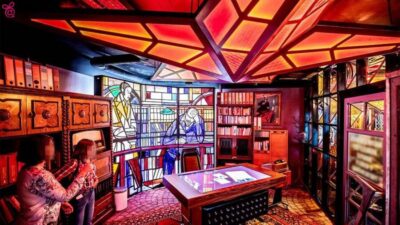
Communist History Tour with House of Terror Option
Read our review →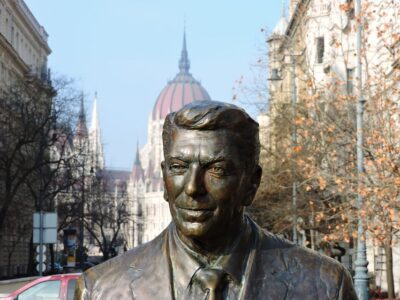
3-Hour Walking Tour About Communism (Small Group)
Read our review →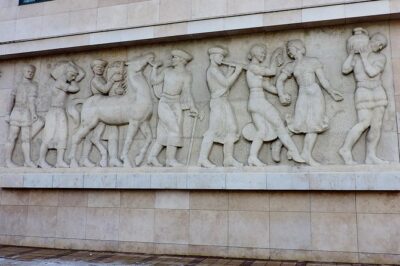
Lives of Hungarians Under Communist and Capitalist system
Read our review →
Private Budapest Hammer & Sickle Communist Times Tour
Read our review →
Browse the lists this tour appears in