
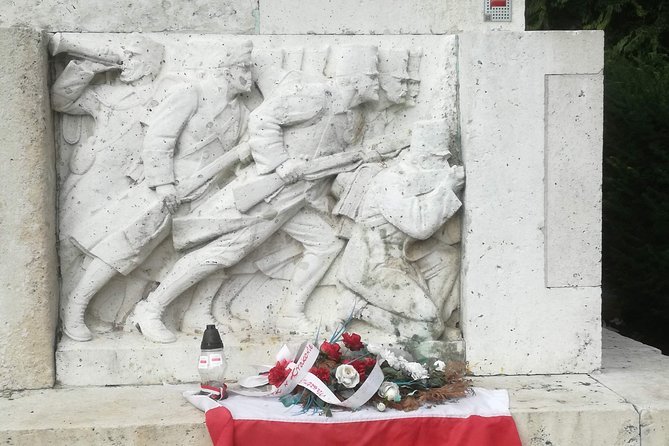
Reviewed · COMMUNIST HISTORY TOURS
Communist Budapest Walking Tour
Budapest’s communist past is easiest to understand when you see where it unfolded. This three-hour walk links the 1956 uprising, Soviet monuments, Cold War politics, and socialist propaganda across the city, rather than treating the era as a dry list of dates.
I like the small group, capped at eight, and the choice of morning or afternoon departure. I also like the ending at the House of Terror, where you can continue on your own. The main drawback is that the museum admission is not included, and the $126.50 price is high for a walking tour that still requires public transport tickets.
Key points to know before booking
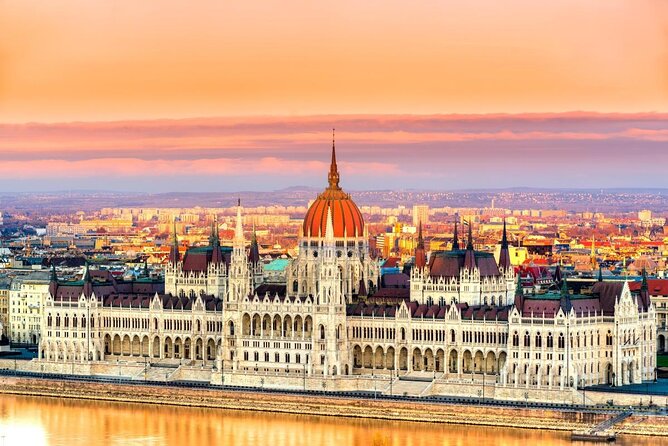
- The route connects major political sites: Parliament, Liberty Square, the former People’s Stadium, Bem József Square, and the House of Terror.
- A historian leads the walk: Guides such as Andras and Kata explain both political events and what daily life felt like under communism.
- The group is deliberately small: A maximum of eight people allows time for questions and discussion.
- Public transport is part of the tour: You will use the Budapest metro or tram system, and tickets are extra unless you already have a pass.
- The House of Terror is an exterior stop: Museum entry is not included, but the location makes a useful follow-up for anyone who wants more.
- Allow more than walking time: The scheduled stops add up to about 95 minutes, with the rest of the three-hour tour used for transit, connecting streets, and conversation.
Why this walk gives Budapest’s communist era a human scale
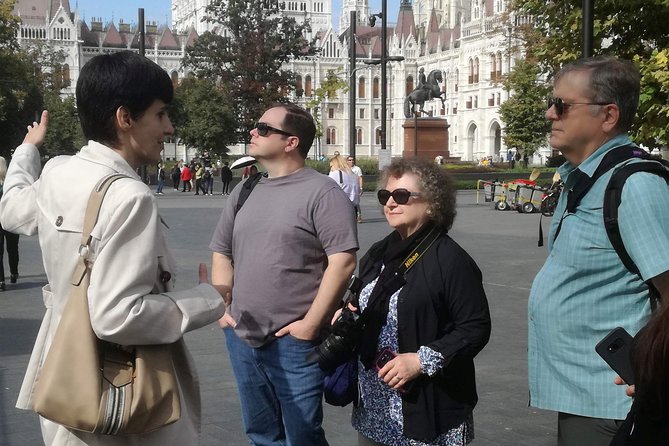
Communism in Budapest is not confined to one museum. It appears in monuments, squares, public buildings, sports venues, and even the way a revolution began with people gathering in the street. This tour helps you connect those pieces.
You will hear about the years after World War II, the Soviet-backed government, the 1956 revolt, the Cold War, and the collapse of the Iron Curtain. The strongest part is the attention to ordinary life. One guide, Kata, is praised for helping people understand what living under communism felt like, not simply what happened at the top of government.
That makes this useful even if you are not a serious history fan. You still need to enjoy listening and asking questions, though. This is not a sightseeing stroll with a few political comments added. The history is the main event.
The tour also benefits from its guides. Andras is praised for handling questions with detail and for encouraging discussion about key moments in Hungarian history. Kata is also named as a particularly effective guide. Guide assignments can change, so you should not book on the assumption that one particular person will lead your departure.
More communist history tours in Budapest:
- Budapest: Communist History Tour with House of Terror Option
★ 4.8 · 182 reviews - Communism in Hungary with a Historian
★ 5.0 · 70 reviews - Budapest: 3-Hour Walking Tour About Communism (Small Group)
★ 4.7 · 70 reviews
Starting near Frankel Leó út and heading toward Parliament
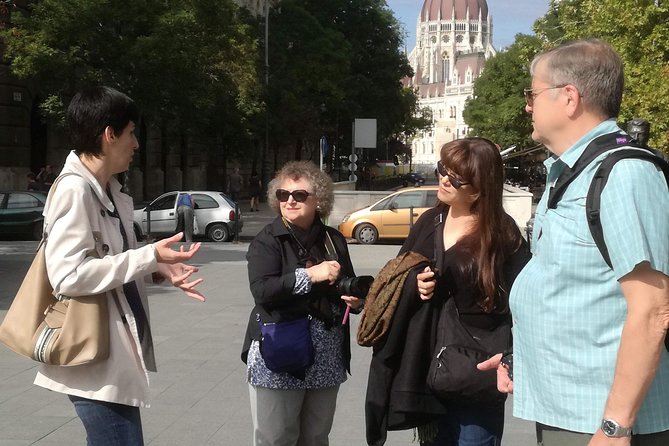
The meeting point is at Frankel Leó út 2-4 in Budapest’s second district. From there, the group uses public transport to reach Kossuth Square, in front of the Hungarian Parliament Building.
Your guide helps with Budapest tram and metro tickets if you do not already have a visitor pass, but the fares are not included. Bring a little extra time for this opening transfer, especially if you are still getting used to Budapest’s ticket system.
The first stop focuses on monuments connected with the 1956 revolution. This is an important way to begin because the uprising was not an isolated political quarrel. It grew from public anger at Soviet control and the Hungarian communist government, and it brought large crowds into the capital’s streets.
You will not simply look at Parliament as a grand building. The point is to see the surrounding square as a place of political action. The listed time here is about 25 minutes, enough for an explanation of the monuments and a chance to ask how the events of 1956 fit into the wider Cold War.
Liberty Square’s Soviet monument and Cold War symbols
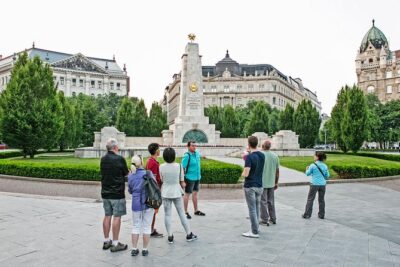
From Kossuth Square, the walk continues to Liberty Square. This is one of the most useful parts of the route because several competing symbols sit close together.
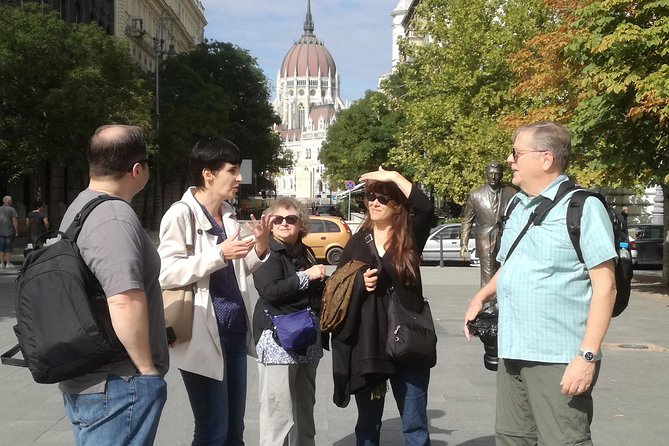
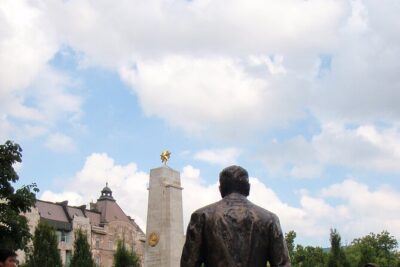
You will see the Soviet War Memorial, the US Embassy, and the statue of Ronald Reagan. Your guide also discusses an atomic shelter connected with the Cold War. Together, these sites show how Budapest became a meeting point for Soviet power, American influence, Hungarian memory, and the fear of nuclear conflict.
The Soviet memorial is especially valuable in a city where memories of the period remain complicated. It is not presented as a simple relic with one easy meaning. Your guide can explain why it is there and how it fits into Hungary’s experience after the war.
The US Embassy adds another layer. It represents the Western side of the Cold War, but its presence in this square is also tied to the long political tension that shaped Hungarian life. The discussion here is likely to be one of the most conversation-heavy parts of the tour.
The scheduled stop takes about 25 minutes. That is enough to compare the different monuments without turning the visit into a rushed photo stop.
Ronald Reagan and Hungary’s view of the Iron Curtain
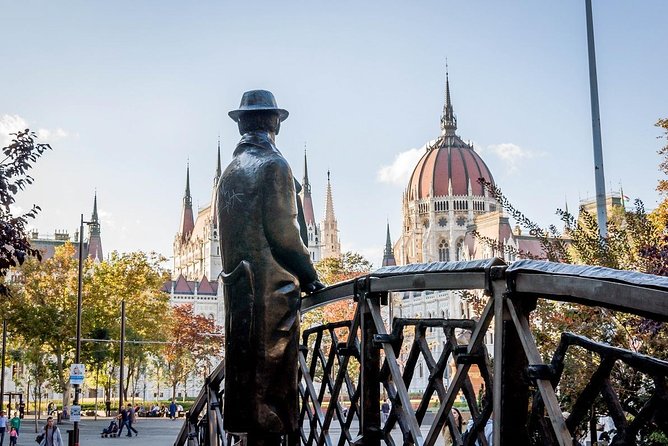
The Ronald Reagan statue receives its own shorter stop, about 10 minutes. Its location near the Cold War memorials makes the symbolism clear.
You will learn why many Hungarians feel a sense of obligation to Reagan for his efforts to bring down the Iron Curtain. The statue is not just about one American president. It opens a discussion about how Hungarians remember the end of Soviet dominance and the role of outside political pressure.
This is a good example of the tour’s wider approach. Instead of presenting communism as a closed chapter, it asks how the period is remembered today. A short stop can still be useful when the guide connects the statue to the events and hopes surrounding the end of the Cold War.
More walking tours in Budapest:
- Budapest: Buda Castle Walk with Saint Stephen’s Hall
★ 4.5 · 3,012 reviews - Big Bus Budapest Hop-On Hop-Off Bus and Walking Tour
★ 3.5 · 2,206 reviews - Budapest: Buda Castle District Walking Tour
★ 4.6 · 2,108 reviews - Budapest City Landmarks Walking Tour in 2 Hours
★ 5.0 · 2,048 reviews
The former People’s Stadium and socialist realist art
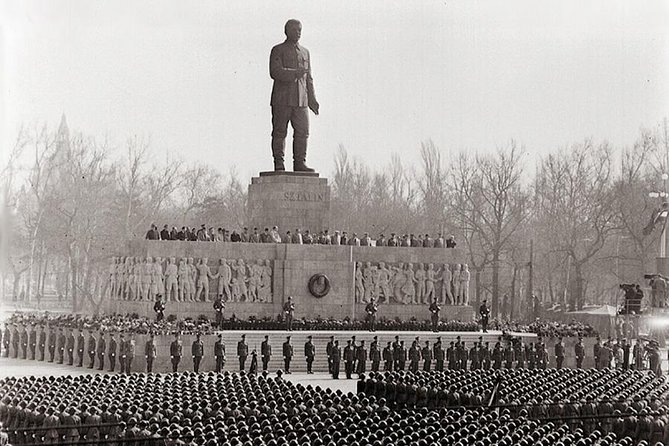
The route then reaches the former People’s Stadium, now called Puskas Ferenc Stadium. The stop lasts about 20 minutes and focuses on the classic socialist realist statues that remain at the site.
These statues are important because communist governments used public art to promote an ideal image of society. Workers, athletes, soldiers, and strong national figures were often shown in heroic forms. At a sports venue, that message could reach a large public audience.
You will see how propaganda was not limited to speeches or newspapers. It was built into the city’s public spaces. The statues could make the state appear powerful, disciplined, and connected to the physical strength of its people.
The stop is free, and you do not need a museum ticket. That keeps the focus on what is visible outdoors. If you are mainly looking for beautiful architecture or famous football sights, this part may feel less essential. If you want to understand how ideology shaped public art, it is one of the more revealing stops.
Bem József Square and the opening of the 1956 uprising
Bem József Square is another key point on the route. It is identified as the place where the first major demonstration of the 1956 uprising began.
This setting helps you picture the uprising as a public movement, not merely a change of government announced behind closed doors. Your guide can explain how demonstrations gathered force and why this particular square mattered.
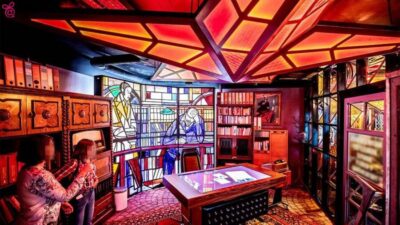
There is also a coffeehouse on the square that has retained its original 1960s interior. That detail gives the stop a more everyday feel. Political events may dominate the story, but the preserved coffeehouse points toward ordinary urban life, social habits, and the material world of the period.
The tour allocates about 25 minutes here. You may find this one of the best places to ask questions because the square combines a major political event with a surviving slice of daily life.
Finishing at the House of Terror
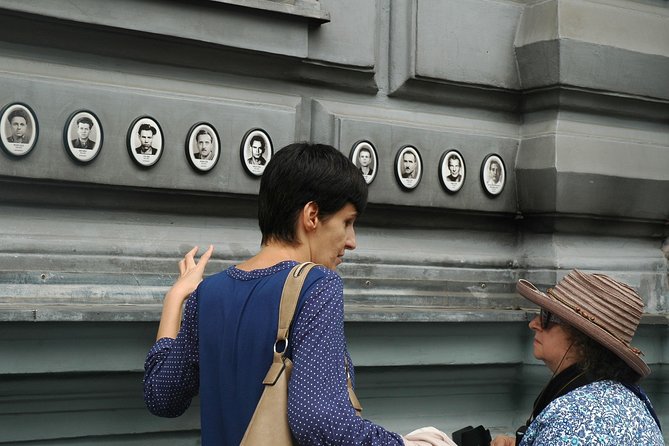
The tour ends outside the House of Terror Museum at Andrássy út 60. The building once served as the headquarters of communist secret services, and a slab of the Berlin Wall sits in front.
It is a powerful endpoint because the walk has already introduced the main themes: political control, protest, Soviet influence, Cold War division, propaganda, and the memory of 1956. The House of Terror brings those subjects into one place.
Museum admission is not included. That is both a limitation and a practical advantage. You are not forced into a longer museum visit if you have other plans, but you can enter afterward if the subject has caught your interest.
The exterior conclusion also gives you a clear choice. You can finish the tour and continue sightseeing, or set aside time for the museum. If you want to visit inside, check your schedule before booking the afternoon departure so you are not rushing to another commitment.
What the $126.50 price really buys you
At $126.50 per person, this is not a budget walk. You are paying for a three-hour private-style experience in a very small group, led by a historian rather than a general city guide. That matters when the subject depends on context and discussion.
The group maximum is eight people, while the tour is described as a small-group experience limited to six in its main highlights. In practical terms, you should expect a compact group, but confirm the exact size at booking if that detail matters to you.
The price includes the guided walk and the historian’s time. It does not include metro or tram tickets, and it does not include entry to the House of Terror. Those extra costs are modest compared with the tour price, but they should be part of your budget.
I see the value most clearly for someone who wants to ask questions. A large group would make it harder to discuss sensitive subjects such as Soviet influence, the 1956 revolt, or changing Hungarian views of Reagan. The price is harder to justify if you want only a quick look at monuments and a few basic facts.
Group discounts are available, and you can choose a morning or afternoon start. The experience is offered in English.
Who will get the most from this experience
You should consider booking if you want:
- A clear introduction to Hungary’s communist period
- More context than a standard city sightseeing walk provides
- A historian who can answer follow-up questions
- A small group and a conversational format
- A route that includes lesser-known political sites
- A useful lead-in to the House of Terror Museum
You may want a different activity if your priority is architecture, food, shopping, or general orientation. This walk is focused. Even the positive guide comments make that clear: you need to want history, not simply sightseeing.
Wear good walking shoes and carry water. You will walk between outdoor sites and use public transportation, so this is not a single-location talk. Most people can participate, but the information provided does not promise a step-free route or describe specific accessibility arrangements.
The tour is usually booked about 27 days ahead. That does not guarantee that every departure sells out, but it is a useful sign that you should reserve early if your Budapest dates are fixed.
Practical booking details and cancellation terms
The tour lasts about three hours and has morning and afternoon departures. It begins at Frankel Leó út 2-4 and ends at the House of Terror Museum on Andrássy út.
Confirmation is provided at booking. The tour operates near public transportation, and your guide can help you buy the required tram or metro tickets if you do not already have a visitor pass.
Free cancellation is available up to 24 hours before the start time for a full refund. Cancellations or changes made less than 24 hours before the start are not accepted for a refund, and the cut-off follows local Budapest time.
Should you book the Communist Budapest Walking Tour?
Book it if you want to understand how communism shaped Budapest’s streets, public art, political memory, and daily life. The route covers a lot in three hours, and the strongest feature is the chance to discuss what you are seeing with a historian.
I would especially recommend it at the start or middle of a Budapest stay, then use the House of Terror as a follow-up if you want more detail. The tour gives you a useful framework before entering the museum.
Skip it if you want a relaxed stroll with little historical explanation, or if the price feels too high for an outdoor tour. For the right audience, though, the small group, strong guides, and carefully linked sites make this a serious and worthwhile look at Budapest’s 20th-century past.
FAQ
How long is the Communist Budapest Walking Tour?
The tour lasts approximately three hours.
Where does the tour begin?
It begins at Frankel Leó út 2-4, 1027 Budapest, Hungary.
Where does the tour end?
The tour ends outside the House of Terror Museum at Andrássy út 60, 1062 Budapest.
Is entry to the House of Terror Museum included?
No. The tour concludes outside the museum, and admission to the interior is not included.
Are public transportation tickets included?
No. Your guide can help you purchase Budapest tram and metro tickets if you do not already have a visitor pass.
How many people can join the tour?
The activity has a maximum of eight participants. It is presented as a small-group tour, with some descriptions referring to groups of up to six.
What is the cancellation policy?
You can cancel at least 24 hours before the start time for a full refund. Cancellations or changes made less than 24 hours before the start time are not refundable.
Recently added around Budapest
- Budapest: Private Walking Tour with a Local Guide★ 3.6 · 6 reviews
- From Budapest: Guided Tour of Eger with Wine Tasting★ 4.5 · 6 reviews
- Budapest: City Bike Tour with Coffee Stop★ 5.0 · 37 reviews
- Budapest: Danube River Views Bike Ride★ 4.8 · 23 reviews
- Budapest: Vacation Photographer to collect great memories★ 5.0 · 49 reviews
- Walk to recent and aged spiritual sanctuaries near Budapest★ 5.0 · 5 reviews
- Budapest: Multilingual Highlights Tour★ 4.8 · 89 reviews
- True Crime Walking Tour in the Buda Castle district★ 5.0 · 26 reviews
Communist History Tours, compared.
Communist History Tour with House of Terror Option
Read our review →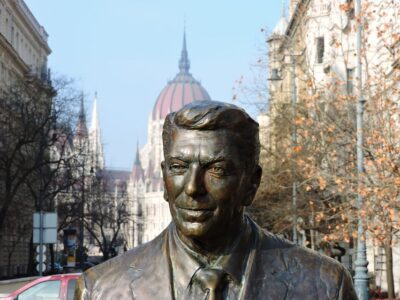
3-Hour Walking Tour About Communism (Small Group)
Read our review →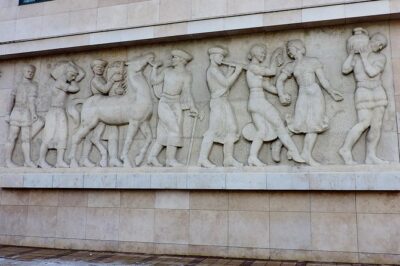
Lives of Hungarians Under Communist and Capitalist system
Read our review →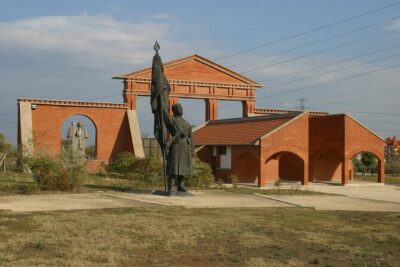
Private Budapest Hammer & Sickle Communist Times Tour
Read our review →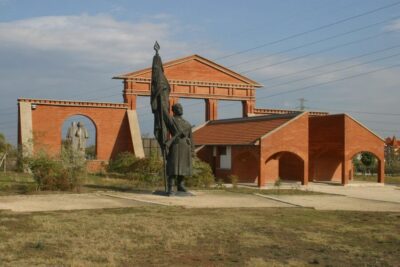
Browse the lists this tour appears in