
Reviewed · COMMUNIST HISTORY TOURS
Communist History Evening Walking Tour of Budapest
Budapest’s communist past is not kept behind museum glass. It is written into churches, squares, monuments, and government buildings you pass on an ordinary evening walk. This tour connects those places, showing how political power changed the city and how Hungarians resisted it.
I like the small group of no more than 15 people, which gives you a better chance to hear the guide and ask questions. I also like the focus on modern consequences, not just dates and party leaders. The main consideration is that you walk about 3 kilometers, often stopping in public spaces where traffic, fountains, or street noise can make it harder to hear.
Key points to know before you go
- A 6 pm start: The evening timing gives the tour a natural end-of-day rhythm and leaves your morning free for museums and sightseeing.
- A route through 22 locations: The walk links sites in Budapest’s eighth, seventh, sixth, and fifth districts.
- Victoria may lead the tour: She is described as a university history professor with clear English, humor, and a personal view of life in Budapest.
- Three major stops: St. Stephen’s Basilica, Liberty Square, and Parliament Square anchor the route.
- A 3-kilometer walk: You need to be able to walk or wheel yourself that distance.
- A practical finish: The tour ends at Parliament Square, close to the Kossuth red-line metro station and tram 2.
Why this Budapest history walk is different
Many city tours point out grand buildings and move on. This one asks what happened inside those buildings when Hungary became a communist state, and what those changes still mean today.
You walk down Andrassy Avenue while the guide explains how streets, monuments, and public spaces changed under different political systems. The route covers parts of the eighth, seventh, sixth, and fifth districts, so the subject is tied to the city around you rather than separated from it.
That approach suits you if you want more than a standard introduction to Budapest. The walk is not mainly about architecture. It is about power, memory, religion, protest, and the choices ordinary people faced under communism.
Victoria receives especially strong praise in the supplied comments. She is described as an actual university history professor, with clear English, humor, and a direct way of explaining how the communist period affected present-day life. Guide quality matters a great deal here because the buildings alone do not explain the subject.
You should also keep your expectations sensible. This is an outdoor history walk, not a visit to a series of indoor museums. You will see important places from the outside and hear the stories that make them meaningful. For a fuller look at the era, the Terror House Museum was specifically suggested as a useful companion visit.
More communist history tours in Budapest:
- Budapest: Communist History Tour with House of Terror Option
★ 4.8 · 182 reviews - Budapest: 3-Hour Walking Tour About Communism (Small Group)
★ 4.7 · 70 reviews - Communism in Hungary with a Historian
★ 5.0 · 70 reviews
Starting at Blaha Lujza tér at 6 pm
The meeting point is Blaha Lujza tér, in Budapest’s 1085 postal area. The tour begins at 6 pm and ends roughly two hours later at Parliament Square.
An evening start works well for a history tour. You can spend the day visiting Budapest’s other sights, then meet the guide when the heat and crowds may have eased. The exact conditions will depend on the season and weather, but the timing gives the walk a clear place in your day.
Bring comfortable shoes. The route covers about 3 kilometers, with several stops for explanation. You are not simply walking from one attraction to another. You will pause in squares and outside buildings, so you need to be comfortable standing as well as walking.
A bottle of water is included. That is a small but useful touch, especially in warm weather. Alcoholic drinks, parking, and unrelated facility or equipment fees are not included, though those items are unlikely to matter much for a walking tour.
Andrassy Avenue and the marks of political change
The first part of the walk follows Andrassy Avenue. The guide explains how the area and its former monuments changed over time.
This is a useful opening because it gives you a wider frame before the tour reaches its best-known stops. Communism was not only a matter of government offices and party slogans. It also changed what appeared in public spaces, whose names were honored, and which symbols could remain in view.
You will want to listen for the guide’s explanations of former monuments and changing public meaning. A statue or avenue can look neutral when you pass it alone. With historical context, it becomes evidence of which political story the state wanted to tell.
The supplied description says the full route covers 22 locations and monuments. Not every one is presented as a beautiful sight. Some sites are attractive public squares, while others are included because something serious happened there. That mix is part of the point, but it also means the experience is more about interpretation than postcard views.
St. Stephen’s Basilica and religion under communism
At St. Stephen’s Basilica, also called Szent Istvan Bazilika, the guide discusses the effect of communism on the Hungarian church and on religious life.
This stop gives the tour a needed change of angle. If you only think of communist history as a conflict between the state and political opponents, you miss how the system affected religious institutions and public faith. The basilica provides a striking setting for that conversation, even though admission to the stop is free and the visit is limited to about 10 minutes.
The guide also tells the story of a famous Hungarian football player who fled the communist system and was later buried at the basilica. That personal story helps turn a large political subject into something easier to grasp. It links sports, exile, national identity, and the question of what it meant to leave Hungary.
You should not expect a long interior visit here. The value comes from the explanation of the site and the people connected with it. If you want extended time inside the basilica, plan that separately.
More evening plans in Budapest:
- Budapest: 1-Hour Evening Sightseeing Cruise with Drink
★ 4.5 · 8,330 reviews - Budapest By Night Sightseeing Cruise
★ 4.1 · 5,835 reviews - Budapest: Evening Cruise including Drinks and Live Music
★ 4.1 · 5,512 reviews - Budapest: Buda Castle District Vampires and Myths Night Tour
★ 4.6 · 3,830 reviews
Liberty Square and the pressure of public memory
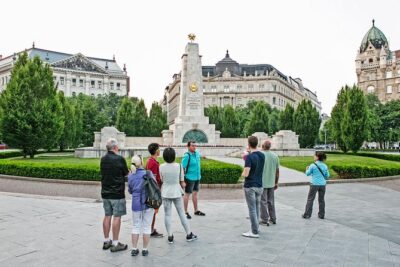
Liberty Square is one of the strongest stops for anyone interested in Budapest’s communist period. The guide explains that the stock exchange was located here and was closed at the start of communism. The square also became the site of bloody protests.
That combination tells you much about the political and economic shift. A place tied to commerce was reshaped when the new system took control. Later, the same public space became connected with protest and violence. Liberty Square is not just a pleasant patch of central Budapest. It is a record of changing ideas about money, authority, and public dissent.
The planned stop lasts about 15 minutes. That is enough for a focused explanation, but not enough for every debate surrounding the square. Pay attention to dates, names, and the guide’s explanation of how different groups remember the events.
There is one practical issue with outdoor stops like this. A fountain, children, street traffic, or people crossing the square can interfere with the talk. One piece of feedback specifically noted that standing in a noisy or unpleasant spot made listening harder. This is a minor drawback, but it is worth knowing. Stay close to the guide and position yourself where you can hear clearly.
Parliament Square and the 1956 uprising
The walk ends at the Hungarian Parliament Building, on Kossuth Lajos tér. This is the emotional center of the route because the square was the site of the 1956 uprising against the ruling communist party, where considerable blood was shed.
The stop lasts about 15 minutes. The guide explains what happened at the square and the sacrifices made by Hungarians resisting communist rule. This is where the tour’s central themes come together: state power, public protest, violence, and the long path toward freedom.
Parliament is also a practical ending point. After the talk, you are close to Kossuth red-line metro station and tram 2. You can continue your evening from there without having to retrace the route to the starting point.
The end location is worth noting if you are arranging dinner, meeting someone, or planning another activity. The tour begins near Blaha Lujza tér and finishes on the opposite side of central Budapest, so it is a one-way walk rather than a loop.
What the guide adds to the history
The best reason to book this experience is the guide’s interpretation. Victoria is repeatedly described as engaging, clear, humorous, and able to answer most questions. Her background as a university history professor gives the walk more depth than a simple list of monuments.
You will hear about events, but also about what it is like to live with their consequences in Budapest today. That present-day connection is important. Communism ended, but political memory, family stories, economic conditions, and attitudes toward authority do not disappear overnight.
A strong guide also helps with a subject that can become dry very quickly. Dates and party names matter, but they are easier to remember when connected to a basilica, a football star, a former stock exchange, or a square where people died.
The tour seems best suited to curious adults, students, and anyone who has already seen Budapest’s major sights and wants more context. It can also work for a parent traveling with a history-minded teenager. One family specifically found the guide’s presentation impressive for a daughter considering the study of history.
Is $36.01 a fair price?
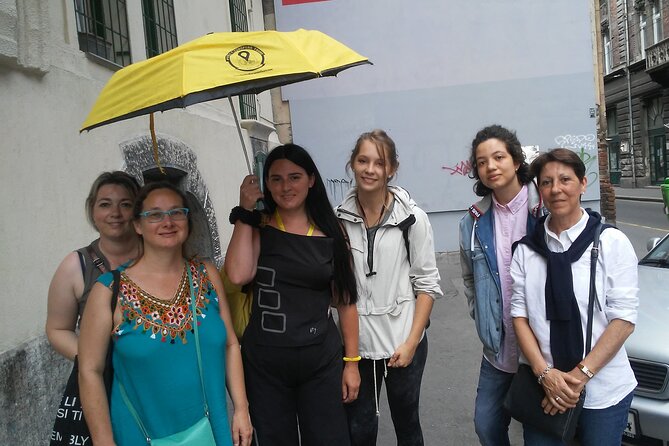
At $36.01 per person, this is not the cheapest way to spend two hours in Budapest. You can walk through these central areas without paying for admission. The price pays for the guide’s time, route planning, historical explanation, bottled water, and the chance to ask questions in a small group.
That value depends on your interest. If you mainly want photographs of St. Stephen’s Basilica and Parliament, you can see both without this tour. If you want to understand why the sites matter and how communism affected religion, business, protest, and daily life, the cost is more reasonable.
A maximum of 15 people is another point in its favor. The group is not private, but it is small enough to feel more personal than a large city walk. The reported rating is 4.7 from 23 reviews, with 91 percent recommending the experience. Those numbers suggest a strong reception, though the sample is not large.
You can cancel for a full refund up to 24 hours before the 6 pm start. Changes made less than 24 hours before the experience are not accepted. The tour can also be moved or refunded if poor weather or an insufficient number of bookings causes cancellation.
Who should book this evening walk?
Book it if you want a serious introduction to Hungary’s communist era and prefer learning in the streets rather than only in museums. It is especially useful if you want a guide who can connect past events with present-day Budapest.
It also suits you if you have already visited the Parliament area, Andrassy Avenue, or St. Stephen’s Basilica and found yourself wanting to know more. The tour gives familiar sights a political and human context.
You may want to skip it if you dislike walking, outdoor lectures, or difficult subjects involving protest and bloodshed. It is also not the best choice if you need a highly visual tour with long indoor visits. The route depends on public spaces, and noise can occasionally affect your ability to hear.
Wear practical shoes, arrive ready to walk, and stay near the guide during each stop. Since the experience is offered in English and confirmation is provided at booking, it is straightforward for English-speaking visitors planning ahead. Most people can participate, service animals are allowed, and the route is near public transportation, but you must be able to walk or wheel yourself for about 3 kilometers.
Should you book it?
I would book this tour if communist history is a real interest rather than a passing curiosity. The route gives you three strong anchor points, but the best part is the material between them: the changing monuments, the effect on religion, the personal story of a famous footballer, and the continuing impact on Hungarian society.
For a first-time Budapest visit, it adds meaning to places you might otherwise photograph and forget. Pair it with a separate visit to the Terror House Museum if you want more time with the period. Skip it only if you want a light sightseeing stroll. This is a thoughtful history walk, and it asks you to pay attention.
FAQ
How long is the Communist History Evening Walking Tour of Budapest?
The tour lasts approximately two hours.
What time does the tour start?
It starts at 6 pm.
Where does the tour begin?
The meeting point is Budapest, Blaha Lujza tér, 1085 Hungary.
Where does the tour finish?
It ends at Parliament Square, at Kossuth Lajos tér 1-3, 1055 Hungary.
How far do I need to walk?
You need to be able to walk or wheel yourself approximately 3 kilometers.
What language is the tour offered in?
The tour is offered in English.
How large is the group?
The maximum group size is 15 people.
Is bottled water included?
Yes. Bottled water is included. Alcoholic beverages are not included.
Can I cancel for a refund?
Yes. You can cancel at least 24 hours before the start time for a full refund. Cancellations or changes made less than 24 hours before the start are not accepted, and poor weather or too few bookings may lead to a refund or a different date.
More Walking Tours in Budapest
- Budapest: Buda Castle Walk with Saint Stephen’s Hall
★ 4.5 · 3,012 reviews - Big Bus Budapest Hop-On Hop-Off Bus and Walking Tour
★ 3.5 · 2,206 reviews - Budapest: Buda Castle District Walking Tour
★ 4.6 · 2,108 reviews - Budapest City Landmarks Walking Tour in 2 Hours
★ 5.0 · 2,048 reviews
More History Tours in Budapest
- Budapest: Historic Cruise with Welcome Drink
★ 4.7 · 6,512 reviews - Budapest Historical Sightseeing – Free Walking Tour
★ 5.0 · 1,302 reviews - Buda Castle District Dark History, Legends and Vampire Night Tour
★ 4.5 · 1,240 reviews - BloodThirsty Hungary: Walking tour & Dark Historical Stories
★ 4.9 · 633 reviews
Recently added around Budapest
- Budapest: Private Walking Tour with a Local Guide★ 3.6 · 6 reviews
- From Budapest: Guided Tour of Eger with Wine Tasting★ 4.5 · 6 reviews
- Budapest: City Bike Tour with Coffee Stop★ 5.0 · 37 reviews
- Budapest: Danube River Views Bike Ride★ 4.8 · 23 reviews
- Budapest: Vacation Photographer to collect great memories★ 5.0 · 49 reviews
- Walk to recent and aged spiritual sanctuaries near Budapest★ 5.0 · 5 reviews
- Trash Art Museum: Hungary’s First Scrap Metal Exhibition★ 4.3 · 72 reviews
- Budapest: Multilingual Highlights Tour★ 4.8 · 89 reviews
Communist History Tours, compared.
Communist History Tour with House of Terror Option
Read our review →
3-Hour Walking Tour About Communism (Small Group)
Read our review →
Lives of Hungarians Under Communist and Capitalist system
Read our review →
Private Budapest Hammer & Sickle Communist Times Tour
Read our review →
Browse the lists this tour appears in