
Reviewed · COMMUNIST HISTORY TOURS
Life Under Communism” with optional visit to the House of Terror
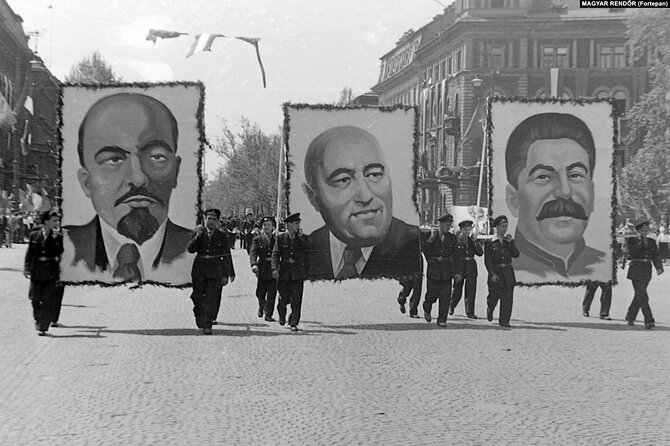
Budapest’s communist past is easiest to understand when you see it on the city streets, not just behind museum glass. This private tour connects Soviet memorials, Parliament, 1956 resistance sites, and old cafés with personal stories about life behind the Iron Curtain. I especially like the firsthand local perspective and the stop at Bambi Presszó, one of the last cafés linked with communist-era Budapest.
I also like that the route includes Corvin köz, where young Hungarians fought Soviet tanks in 1956, and that you can add either Memento Park or the House of Terror. The main caution is that the tour has several options, and the price, transportation, museum choice, and coffee details need careful checking before you book.
Key points to know before booking
- Private format: Only your group takes part, with a maximum of five people.
- Personal stories: Guides including Miklós and Balázs explain daily life under dictatorship, not only dates and monuments.
- Bambi Presszó stop: Coffee and conversation add a human scale to the political history, but food and drinks may not be included in the final price.
- 1956 focus: Corvin köz and Kossuth Square help explain the uprising and its cost.
- Optional museum choice: You may choose Memento Park or the House of Terror, but these are separate options rather than automatic stops.
- Walking plus transit: Expect a moderate physical effort, and possibly public transportation, especially for Memento Park.
Why this tour makes communist Budapest easier to understand
Budapest can look grand and carefree at first glance: elegant squares, the Parliament, the Danube, and old bridges. This tour shows you the less polished story beneath that beauty. You move from official Soviet memorials to places where ordinary Hungarians challenged Soviet rule, then finish with a museum or statue park that gives the past a physical form.
I like this approach because communism is not treated as a chapter sealed away in a textbook. The guide links public spaces with ordinary details, including café life, transportation, censorship, fear, and the practical problem of getting through daily life under a dictatorship.
The private setup matters. With up to five people, you can ask questions and adjust the discussion more easily than on a large group walk. Guides such as Miklós, Balázs, and Agy are described as having strong personal and historical knowledge of the period. One guide also helps visitors use Budapest’s public transportation system, which can be useful if your tour includes Memento Park or if you plan to explore on your own later.
The tour is advertised at about three hours, but the optional museum or park adds about an hour. One group’s experience lasted more than four hours after the route was adjusted, so allow extra time if you choose an add-on or want a slower discussion.
More communist history tours in Budapest:
- Budapest: Communist History Tour with House of Terror Option
★ 4.8 · 182 reviews - Budapest: 3-Hour Walking Tour About Communism (Small Group)
★ 4.7 · 70 reviews - Communism in Hungary with a Historian
★ 5.0 · 70 reviews
Liberty Square and the Soviet memorial
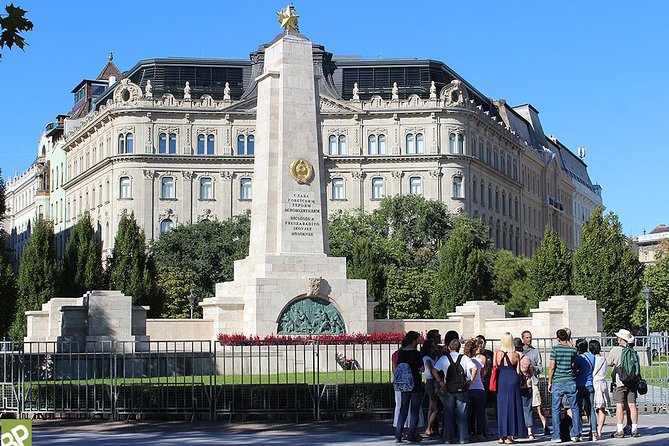
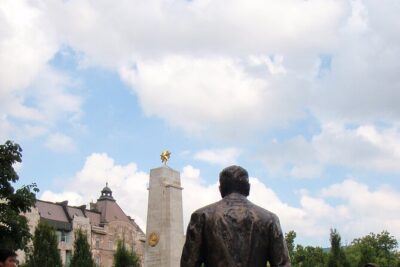
The tour begins at Liberty Square, or Szabadság tér, one of central Budapest’s broadest and most formal open spaces. The square has a strong Habsburg connection, but the focus here is the large Soviet memorial to the siege of Budapest.
The siege lasted 50 days near the end of World War II. The memorial honors the Soviet army and presents an official version of liberation. That makes it an important first stop, but also a complicated one. The monument can feel imposing and out of place to modern eyes, especially in a square surrounded by elegant buildings and peaceful lawns.
Your guide uses the memorial to explain how Soviet power became part of Hungarian public life after the war. The value is not just in seeing the monument. It is in understanding why it remained in place after the political system changed, and why Budapest eventually moved many communist-era statues to Memento Park instead of destroying them all.
Liberty Square is also a pleasant place to pause. Its open lawns and spacious design give you room to collect your thoughts before the more painful stories of 1956. Wear comfortable shoes, since the route continues through several city districts and includes a fair amount of walking.
Kossuth Square and the Parliament story
From Liberty Square, the route continues to Kossuth Square, home of the Hungarian Parliament Building. You have about 20 minutes here, and the admission is free.
The square carries the name of Lajos Kossuth, an important Hungarian political figure. Facing Parliament, you can also see the Museum of Ethnography and the Ministry of Agriculture. The setting is grand, but the tour focuses on a tragic event during the 1956 revolution.
A firefight took place in front of Parliament while a mixed civilian crowd gathered. Men, women, children, and older people were present. The exact number of people killed remains uncertain, and the event helped push Hungary toward open revolt and armed resistance.
This stop works best if you want political history tied to a real place. Instead of hearing only that Hungarians resisted Soviet control, you stand in the square where civilians faced lethal violence. The setting also shows how national politics, public protest, and state power met in one highly symbolic location.
The drawback is time. Twenty minutes is enough for orientation and discussion, but not for an extended visit to Parliament or the nearby museums. This is an exterior stop, not a Parliament interior tour.
Petőfi Statue and the Danube crossing
The route then reaches the Petőfi Statue and Március 15. Square near the foot of Erzsébet Bridge. The area sits in front of one of Budapest’s oldest churches and was renovated in 2011.
This stop shifts the mood. Március 15. Square is used for social life as well as sightseeing, so you see how older monuments and everyday city activity share the same space. Petőfi is closely linked with Hungarian national identity, and the square helps broaden the tour beyond Soviet monuments alone.
Afterward, you cross one of Budapest’s major bridges toward Buda and the foot of Gellért Hill. The bridge walk gives you a chance to see the Danube setting that shapes the city, while the guide continues the story of Budapest’s divided geography and political memory.
The tour does not promise a long scenic pause here, so keep your expectations realistic. This is a connecting section with views and context rather than a separate attraction with extended sightseeing time.
A few more Budapest half-days to weigh up
- Budapest: City Highlights Cruise with Welcome Drink
★ 4.6 · 35,610 reviews - Budapest: Unlimited Prosecco, Beer and Aperol Spritz Cruise
★ 4.8 · 25,310 reviews - Budapest: Széchenyi Spa Day Ticket with Optional Upgrades
★ 4.3 · 23,911 reviews - Budapest: Nighttime or Daytime Sightseeing Cruise
★ 4.2 · 21,062 reviews
Corvin köz and the young fighters of 1956
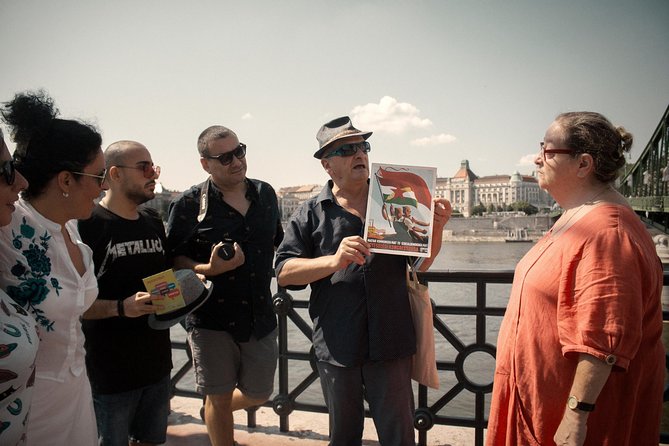
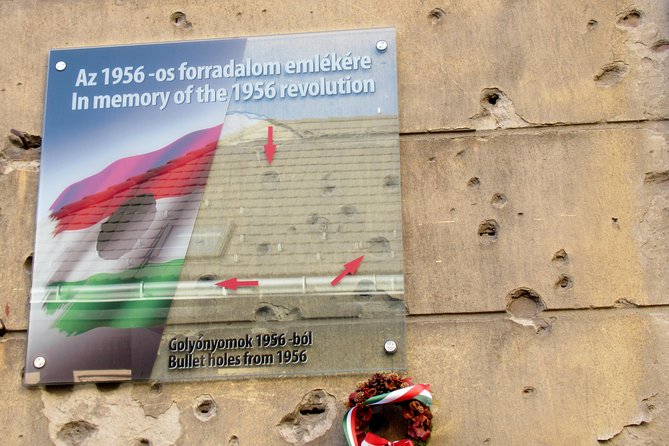
Corvin köz is one of the strongest stops on the route. In 1956, local young people used this area as a resistance center. They fought Soviet forces with Molotov cocktails and guns taken from soldiers, facing Soviet tanks with limited weapons and little formal military training.
The physical setting helps you picture how urban resistance worked. Streets, apartment blocks, and narrow approaches could give fighters a temporary advantage, but they also made the fighting dangerous. Your guide explains the invasion and its aftermath while pointing out reminders connected with the battles.
I consider this one of the most valuable parts of the tour because it moves the story away from government buildings and official monuments. Corvin köz shows the uprising as a local, human event. The focus on young people also makes the history easier to grasp. These were not distant political leaders alone. Ordinary residents took enormous risks.
If you are mainly interested in architecture or classic Budapest sightseeing, this stop may feel intense and less visually polished. If you want to understand why 1956 still matters, it is central to the experience.
Gellért Square and the Liberty Statue view
After Corvin köz, you reach Gellért Square by crossing back toward Buda. The square is named for Bishop Gellért, also called the Martyr for Hungarian Christendom.
From here, you get a view of the Liberty Statue on Gellért Hill. The statue was erected in 1947 to remember the Soviet liberation of Hungary. Like the monument in Liberty Square, it carries a political message shaped by the period in which it was created.
The guide can use this view to discuss how public monuments change meaning. A statue built to honor Soviet liberation was later understood through the broader history of Soviet control. That shift is one of the most useful ideas in the tour: monuments do not speak for themselves. Their meaning depends on who built them, who controls the surrounding country, and how later generations see the past.
This is also a good rest point before an optional museum or park visit. The route is not a strenuous hike, but you should have a moderate level of fitness and be ready to walk across public spaces and bridges.
Bambi Presszó and the daily life of dictatorship
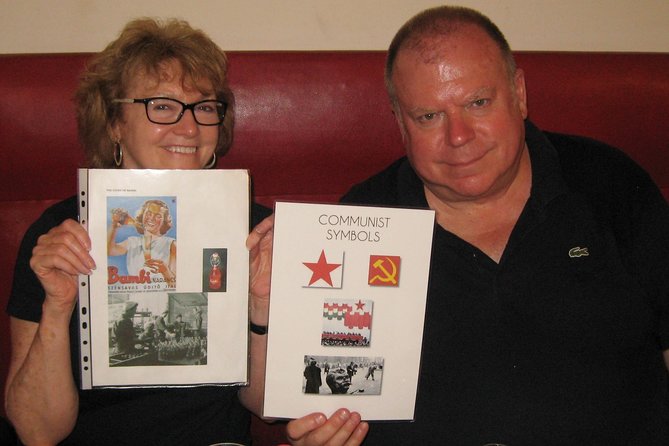
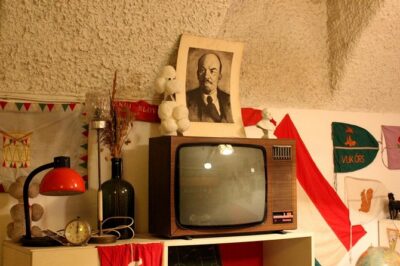
A coffee stop at Bambi Presszó gives the tour its most personal touch. The café is described as the last stronghold of communist culture, and it offers a setting for discussing what life felt like behind the Iron Curtain.
This part is more than a refreshment break. A café can help explain the ordinary side of history: where people met, how they spent free time, and how familiar routines continued under a rigid political system. The strongest guides use the pause for questions, and previous tour experiences describe the conversation as a useful place for personal stories and local context.
Check the cost before you sit down. Additional food and drink are not included in the stated inclusions, and one booking dispute centered on whether coffee was part of the package. The safest approach is to ask exactly what your selected option covers.
Bambi is especially useful if you want more than monuments. It gives you a place to connect political history with daily habits, though the value depends heavily on the guide’s speaking volume and willingness to explain. One critical account described a guide as difficult to hear, so ask for clear narration if you need it.
Choosing Memento Park or the House of Terror
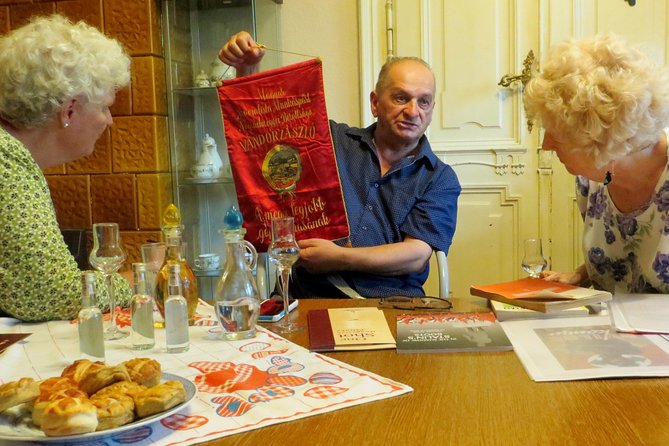
The optional visit is where the tour can change character. You choose between Memento Park and the House of Terror, rather than treating both as guaranteed stops.
Memento Park
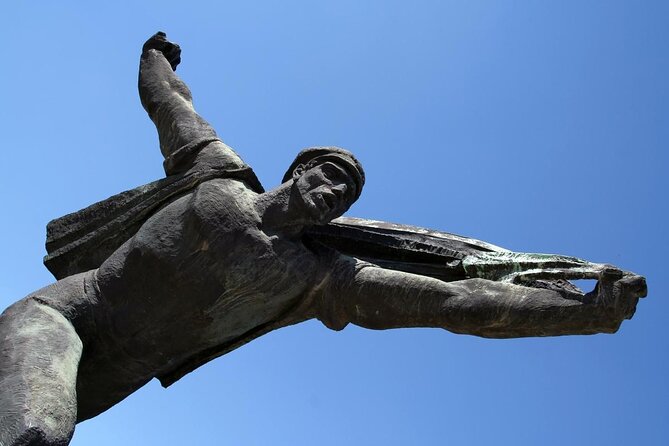
Memento Park was created after communism collapsed in 1989. Budapest had many statues and public artworks celebrating the old system. In 1993, the city chose to preserve many of them in one location rather than destroy them.
You spend about an hour here, with admission included when this option is selected. The park lets you see political statues together, away from their original city settings. That arrangement encourages questions about propaganda, public memory, and what a city should do with monuments from a rejected political era.
For many people, this is the better choice if you want to see physical remains of communist public art. The park also works well after Liberty Square and the Liberty Statue because you can compare monuments that remain in central Budapest with those moved outside the city.
Transportation matters. One experience used public transit and noted an additional group travel cost. Confirm whether transportation is included in your price, since the general inclusions mention entrance tickets but not every transit expense.
House of Terror Museum
The House of Terror takes about an hour when selected, and admission is included for that option. The building has been renovated inside and out, with a dark exterior, granite walkway, blade-like walls, and a T-54 tank on display inside.
This is a more structured museum experience than Memento Park. The design itself is forceful, and the building’s presentation gives the visit a serious, enclosed feel. If you want an indoor museum with exhibits rather than an outdoor collection of statues, this is likely the better match.
Do not assume the House of Terror is automatically included because it appears in the overall tour title. The options are separate, and one booking complaint arose from a misunderstanding over this point. Confirm your selected version before paying, and check whether the route includes enough time for the museum.
The museum option is also not ideal if your main goal is a relaxed walking tour. The building and subject matter can feel heavy, while Memento Park offers more space to look around and discuss the statues.
Price, timing, and what you actually receive
The price is $280.33 per private group of up to five. That can be reasonable for a small group that wants a custom discussion, but it is harder to justify if you expect a standard sightseeing walk with every expense included.
The price buys the guide, informative handouts, and the entrance ticket for the selected visit option. It does not include additional food and drink, and the general information does not promise hotel pickup and drop-off. Public transportation may also cost extra.
For a full group of five, the per-person cost is much easier to accept than for one or two people. You are paying for privacy and flexibility, not simply for admission tickets. If your group wants to ask many questions, compare family memories, or focus on 1956, the format can provide real value.
I would ask these questions before booking:
- Is the selected option the city walk, Memento Park, or House of Terror?
- Is coffee at Bambi included?
- Is public transportation included for the chosen route?
- Where exactly does pickup occur, if pickup is offered?
- How much time is reserved for the optional museum or park?
The experience is offered in English, confirmation arrives at booking, and children must be accompanied by an adult. Service animals are allowed. Free cancellation is available up to 24 hours before the start time. Changes or cancellations inside that window are not accepted for a refund.
Who should book this Budapest history tour?
I would choose this tour if you want Budapest’s twentieth-century history explained by a local guide rather than encountered as a list of dates. It suits history fans, families with older children, and first-time visitors who want context for the Soviet memorials and 1956 sites they see around town.
Miklós and Balázs are named guides associated with strong personal attention, and another guide, Agy, is described as willing to answer questions about Soviet history. The experience can be especially rewarding if you ask about daily life, transportation, censorship, and how monuments changed meaning after 1989.
I would be more cautious if you need a polished, museum-style presentation at every stop. Guide quality matters here. Some experiences have been praised for warm, detailed explanations, while one poor experience involved a soft-spoken guide, limited enthusiasm, and confusion over the selected option. Since the tour is private, your ability to state your interests early can shape the day.
Should you book it?
Book it if you want a personal, discussion-based look at communist Budapest and you are willing to clarify the details before departure. I would lean toward Memento Park if statues and public memory interest you, and toward the House of Terror if you prefer an indoor museum with a more formal presentation.
The strongest reasons to go are Corvin köz, the firsthand stories, the Parliament and Kossuth Square context, and the unusual coffee stop at Bambi Presszó. The main risks are the high group price, extra transportation or drink costs, and uncertainty over which optional visit you selected.
Ask for the exact itinerary in writing, confirm the museum or park, and tell the guide what you want to discuss. With those points settled, this can give you a side of Budapest that ordinary sightseeing rarely reaches.
FAQ
How long does the tour last?
The main walking experience lasts about three hours. An optional visit to Memento Park or the House of Terror adds about one hour, and the total can run longer if the route is adjusted.
Is this a private tour?
Yes. Only your group participates, with a maximum of five people.
Is the tour offered in English?
Yes. The experience is offered in English.
Can I choose between Memento Park and the House of Terror?
Yes. The itinerary provides separate options for Memento Park and the House of Terror. Confirm which option you selected, since the visits are not automatically combined.
Is admission included?
Admission is included for the selected visit option. Other entrance tickets not listed are not included.
Is hotel pickup included?
Pickup is offered, but hotel pickup and drop-off are listed as not included. Confirm the exact meeting or pickup arrangement before the tour.
Recently added around Budapest
- Budapest: Private Walking Tour with a Local Guide★ 3.6 · 6 reviews
- From Budapest: Guided Tour of Eger with Wine Tasting★ 4.5 · 6 reviews
- Budapest: City Bike Tour with Coffee Stop★ 5.0 · 37 reviews
- Budapest: Danube River Views Bike Ride★ 4.8 · 23 reviews
- Budapest: Vacation Photographer to collect great memories★ 5.0 · 49 reviews
- Walk to recent and aged spiritual sanctuaries near Budapest★ 5.0 · 5 reviews
- Trash Art Museum: Hungary’s First Scrap Metal Exhibition★ 4.3 · 72 reviews
- Budapest: Multilingual Highlights Tour★ 4.8 · 89 reviews
Communist History Tours, compared.
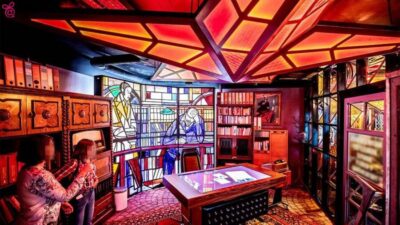
Communist History Tour with House of Terror Option
Read our review →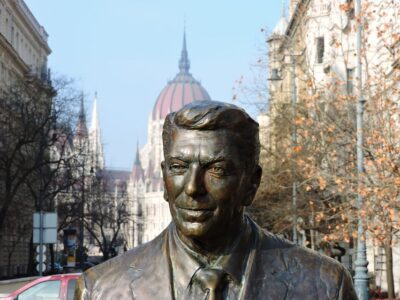
3-Hour Walking Tour About Communism (Small Group)
Read our review →
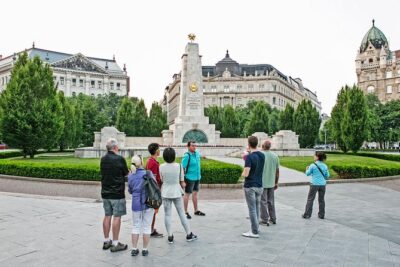
Lives of Hungarians Under Communist and Capitalist system
Read our review →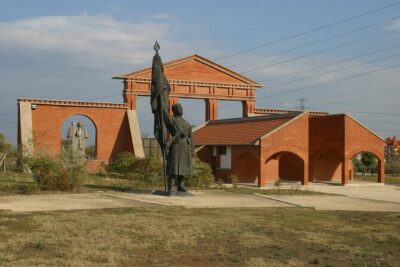
Private Budapest Hammer & Sickle Communist Times Tour
Read our review →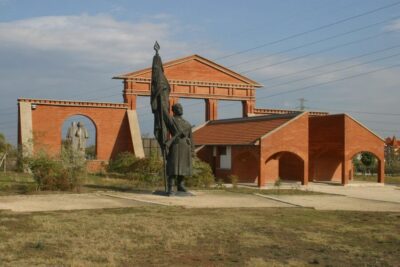
Browse the lists this tour appears in