
Reviewed · COMMUNIST HISTORY TOURS
Rise Against the Soviet: The 1956 Revolution – Private Tour
Budapest’s 1956 Revolution comes into focus when you follow it street by street. This private tour links Parliament, the old Communist Party headquarters, Bem Square, Radio Budapest, and Corvin Cinema, where young Hungarians faced Soviet tanks with guns and Molotov cocktails. The guide adds the human side, including what daily life felt like before and after the uprising.
I like the private format, since your group can ask direct questions and the guide can adjust the pace. I also like the mix of walking and public transport, which lets you cover a broad sweep of Budapest rather than stare at one memorial for three hours.
The main caution is time. Three hours is short for a subject that reaches from the 1848 and 1948 rebellions through the 1956 uprising and the fall of Communism in 1990. If you already know the history, ask the guide to keep the focus tightly on 1956.
Key points before you book
- Follow the revolt across both sides of the Danube: The route moves from Kossuth Square and Margaret Bridge to Bem Square, central Budapest, and Corvin Cinema.
- Expect personal context: Guides Peter and Miklos have been praised for explaining Communist-era life through firsthand experience and family or personal insight.
- See the sites of real conflict: Radio Budapest and Corvin köz were not symbolic stops alone. Both were tied directly to fighting and appeals for outside help.
- Plan for public transport: Tickets and passes are not included, so carry money or a valid transit pass.
- This is history with uneven depth: The guide may cover wider Hungarian history, which helps with context but can leave less time for the 1956 details you came to study.
- The group stays small: It is a private activity for up to five people, with hotel pickup or a central meeting point arranged in Budapest.
Why Budapest’s 1956 story works best on foot
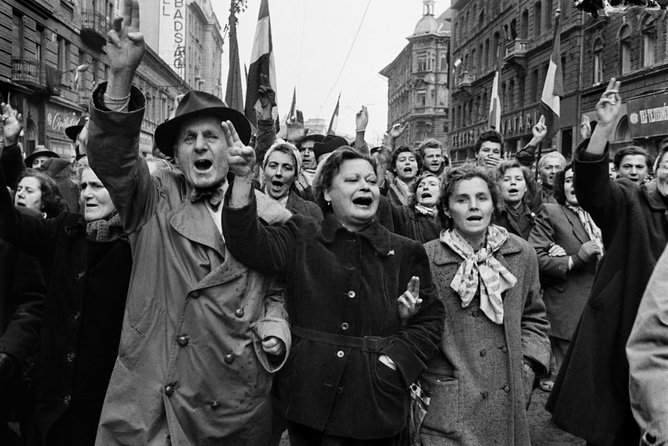
The 1956 uprising was not confined to a single battlefield or grand monument. It unfolded in squares, radio studios, cafés, bridges, and ordinary city streets. That is the strength of this route: you see how political protest moved through the city and how quickly peaceful demonstrations turned into armed resistance.
I find the tour most useful if you know the basic outline but want to understand the geography. At Kossuth Square, for example, the massacre is not just a date in a textbook. At Corvin Cinema, the uprising feels more immediate because the guide can explain how local fighters held one of the main resistance points.
The tour also places 1956 in a longer story. Sándor Petőfi’s role in the 1848 revolution helps explain why his statue became a gathering place again in 1956. The Polish workers’ protests help explain why Hungarian students first assembled at Bem Square. That wider frame is valuable, though it needs to be managed carefully in a three-hour tour.
More communist history tours in Budapest:
- Budapest: Communist History Tour with House of Terror Option
★ 4.8 · 182 reviews - Budapest: 3-Hour Walking Tour About Communism (Small Group)
★ 4.7 · 70 reviews - Communism in Hungary with a Historian
★ 5.0 · 70 reviews
Kossuth Lajos Square and the Parliament massacre
Begin at Kossuth Lajos Square, home to the Hungarian Parliament. The square is one of Budapest’s grandest civic spaces, but this visit is not mainly about architecture. It is about the mass demonstration in October 1956 and the shooting that killed dozens of people.
Your guide will explain how the square became a focus of public anger against the Communist government. The setting makes the political stakes clear: protesters gathered in front of the state’s most important national building, asking for change while Soviet power backed the existing system.
Allow about 25 minutes here. That is enough to understand the site and its place in the uprising, but not enough for a long architectural tour of Parliament. No admission ticket is included or needed for this stop.
I would pay close attention to the guide’s explanation of the massacre itself. The facts can be difficult, and the value of a good guide is in connecting the event to the people who were there, not simply listing casualties and dates.
Margaret Bridge, the White House, and Imre Nagy
From Parliament, the route moves toward Margaret Bridge and the Danube. Near the bridge is the building once known as the White House, the headquarters of Hungary’s Communist Party government. It offers a useful contrast with Parliament: one building represented the formal state, while the other was tied to the party structure that controlled political life.
You will also see the statue of Imre Nagy. He was Prime Minister during the 1956 Revolution, later arrested and executed. His story is central to understanding the uprising because he came to represent an attempt to give Hungary more independence from Moscow.
This stop lasts about 20 minutes. The short visit works well as a connecting chapter between the massacre at Parliament and the demonstrations that followed, but you should not expect a detailed biography of Nagy unless you ask for one.
The statue is also a reminder that 1956 did not end when Soviet forces retook Budapest. The executions and punishments that followed shaped Hungary for decades. If that aftermath matters to you, say so early in the tour.
Bem Square and the start of the student revolt
Bem Square on the Buda side is one of the tour’s most important stops. In 1956, roughly 200,000 Hungarian students gathered there in a rally originally organized in support of Polish workers. The demonstration helped turn reform demands into a national movement.
This is where the tour can explain how quickly events changed. What began as solidarity with Poland became a public challenge to Soviet control. Students and workers demanded political freedom, national independence, and an end to the system imposed after the Second World War.
The square also helps you picture the scale of the uprising. It was not a small circle of dissidents meeting behind closed doors. Huge crowds entered public spaces and made their opposition impossible to ignore.
The visit lasts about 30 minutes. Public transport connects this section of the route, and you need to buy your own tickets or use a valid pass. The tour operator offers pickup from your Budapest hotel or an agreed central meeting point, which makes the start easier if you are still finding your way around the city.
A short stop at Bambi Eszpresszó adds a welcome everyday detail. The café has continued since the 1960s with the same atmosphere and interior design, and it served as a meeting place for Buda-side intellectuals. Food and drinks are not included, so treat it as a look at the setting rather than a promised café break.
A few more Budapest half-days to weigh up
- Budapest: City Highlights Cruise with Welcome Drink
★ 4.6 · 35,610 reviews - Budapest: Unlimited Prosecco, Beer and Aperol Spritz Cruise
★ 4.8 · 25,310 reviews - Budapest: Széchenyi Spa Day Ticket with Optional Upgrades
★ 4.3 · 23,911 reviews - Budapest: Nighttime or Daytime Sightseeing Cruise
★ 4.2 · 21,062 reviews
Sándor Petőfi and the words that stirred rebellion
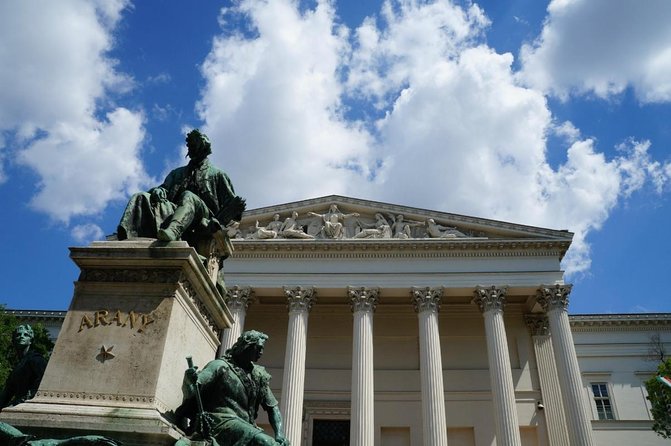
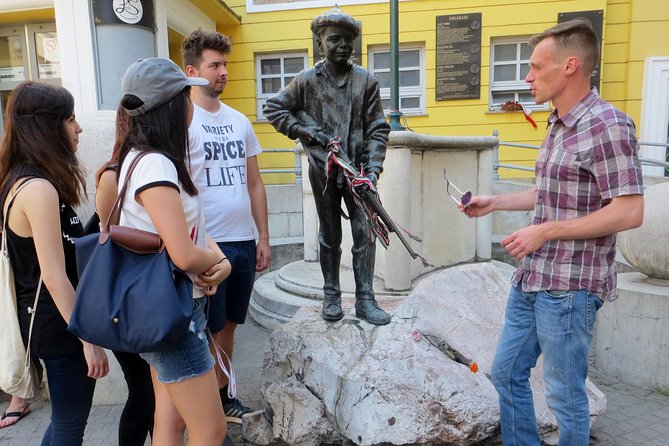
The next stop is the statue of Sándor Petőfi, a major figure in Hungary’s 1848 revolution. Petőfi came to represent opposition to government rule, which explains why his statue remained a natural meeting point for later political protests.
The 1956 connection is especially striking. Actor Sinkovits Imre came to the statue and recited Petőfi’s revolutionary words. He was later arrested and imprisoned. The story shows how a poem, a public performance, and a familiar national symbol could become political acts under an authoritarian government.
This stop takes about 15 minutes. It is brief, but it gives the tour an important thread: Hungarians in 1956 were not inventing their national story from scratch. They were reaching back to earlier struggles for independence and using those memories against Soviet rule.
If you want more time for the military events of October and November 1956, this is one place where you may prefer a shorter explanation. If you enjoy political symbolism and the connection between culture and protest, it deserves the full stop.
Radio Budapest and the fight for a public voice
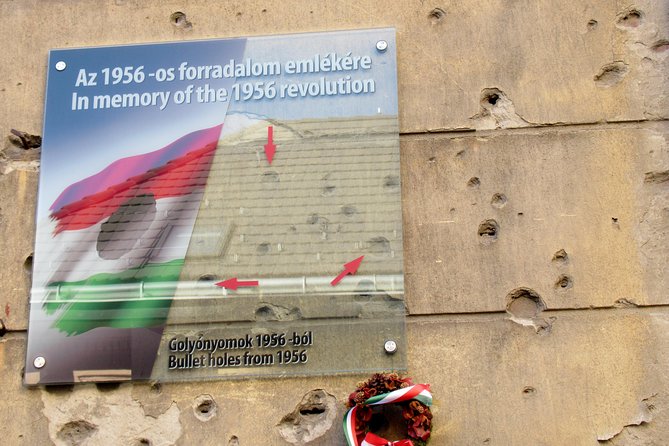
The route then reaches the Hungarian Radio building, also called Radio Budapest, along narrow Sándor Bródy Street. The building is somewhat tucked away from Budapest’s main avenues, which makes its role easy to miss without a guide.
In 1956, Radio Budapest became one of the main centers of fighting. Revolutionaries tried to broadcast their demands and appealed to the outside world for help. Control of the radio mattered because whoever controlled the microphone could shape the story of the uprising.
The description of this stop refers to the Hungarian National Museum area, but the historical focus is the radio building rather than museum galleries. Do not expect an indoor museum visit or a ticketed exhibition here. The value comes from standing near the location and understanding why it became a target.
Allow about 20 minutes. Ask the guide how the radio’s role changed during the fighting and what happened when revolutionaries tried to use it. Those questions can turn a quick exterior stop into one of the tour’s clearest explanations of information control.
Corvin Cinema and the young fighters of Corvin köz
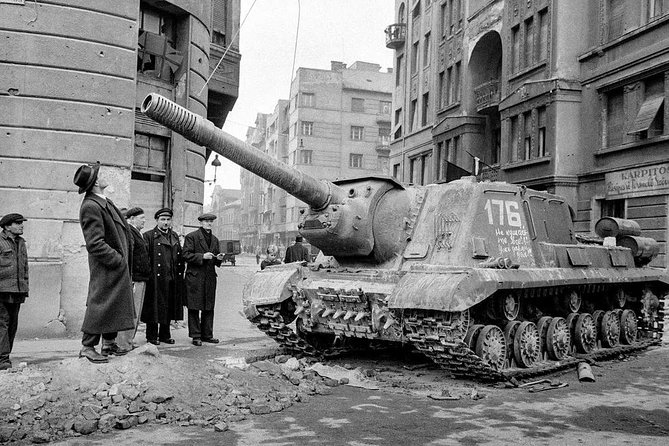
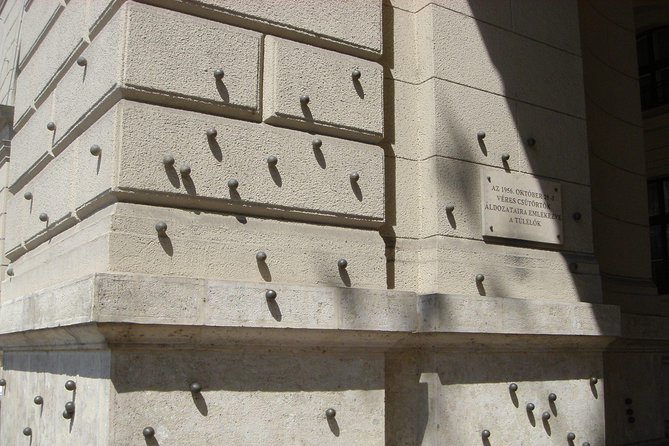
The tour finishes at Corvin Cinema and Corvin köz, the strongest physical chapter of the route. In 1956, local young people used the area as a resistance center. They fought Soviet troops with guns taken from soldiers and Molotov cocktails used against Soviet tanks.
The setting helps correct a common picture of the revolution as only a student protest or a political crisis among officials. Corvin köz brings you to the street fighting, where ordinary residents faced a military force far better equipped than they were.
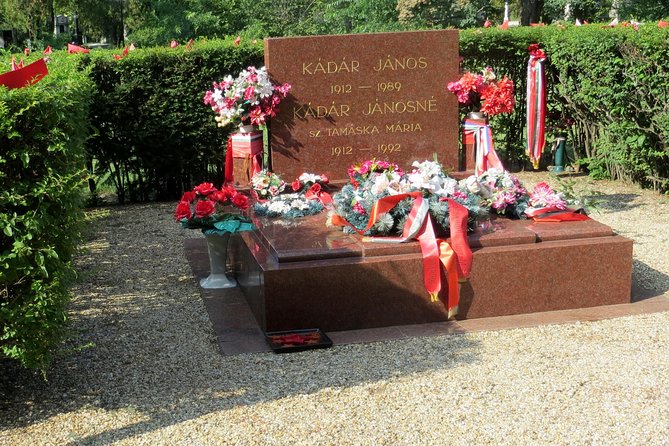
Your guide will discuss the Soviet invasion and what followed after the resistance was crushed. You will also see reminders connected with the battles. A past tour route has included an underground memorial connected to the 1956 Revolution, and another extended visit included a cemetery where people killed during the uprising were buried. Since the exact stops can vary, ask at the beginning if these places can be included.
Plan on about 30 minutes here. The location is an effective endpoint because it leaves you with the human cost of the uprising rather than a tidy political finish.
What the private format adds
This is a private activity for your group only, with up to five people. That matters for a subject that can raise difficult questions about repression, resistance, executions, and life under Communism. You can ask the guide to slow down, clarify a date, or spend more time on the sites that matter most to your family.
One especially useful example involved a 91-year-old participant whose family story was tied directly to the 1956 escape from Hungary. The guide adjusted the pace and shaped the discussion around that personal connection. If someone in your group has a similar family link, mention it when booking or at the start.
Past guides have included Peter and Miklos. Peter has been praised for placing 1956 within Hungary’s wider history and for sharing personal insight into life before and after the uprising. Miklos has also been singled out for explaining the Communist era and answering detailed questions. Guide assignment may vary, so you can ask who will lead your tour.
The private format does not guarantee a custom route, but it gives you a better chance to shape the conversation than a large group tour would.
Price, transport, and the value of three hours
The listed price is $228.66 per group of up to five people. For one person, that is expensive. For five, it works out to about $45.73 each, before transport and any café purchase. For a couple, the cost is about $114.33 each, so the value depends heavily on how much personal attention you want.
The price includes handouts and a Communist-era souvenir. It does not include food, drinks, or public transport tickets. Those extra costs are modest, but you should know about them before setting out.
Three hours is enough for a strong introduction, not a full study of 1956. One past booking ran about half an hour longer than advertised, but you should not count on that. The route covers a lot of ground, and the time spent moving between Buda and Pest can reduce the time available at each site.
I would book this tour if you value a private guide who can explain cause and effect, personal stories, and the physical setting. I would hesitate if you already have advanced knowledge of the revolution and want every major battlefield, prison, cemetery, or memorial covered in detail.
Who should choose this Budapest history tour?
This is a good match for:
- People interested in the 1956 Revolution and the Communist period
- Families who want a private pace and room for personal questions
- History-minded visitors who prefer real streets and civic spaces to a standard museum circuit
- Visitors who want to connect Hungarian events with the earlier 1848 and 1948 revolutions
- Small groups of up to five who can share the fixed price
You may want a different experience if you prefer a relaxed sightseeing walk with little political detail. The subject is serious, and several stops involve massacres, executions, armed conflict, and Soviet repression.
You should also be ready to walk and use public transport. The activity requires moderate physical fitness, and service animals are allowed. Pickup is available from your Budapest hotel or from a central point agreed in advance.
Should you book Rise Against the Soviet?
Book it if you want to understand where the 1956 Revolution happened, not just when it happened. The strongest parts are the private discussion, the firsthand Communist-era context offered by guides such as Peter or Miklos, Bem Square, Radio Budapest, and the final stop at Corvin köz.
Before booking, tell the guide how much you already know and ask for a 1956-focused route. That simple request may help prevent the tour from spending too much time on general Hungarian history. If you are comfortable using public transport and paying separately for tickets, the route offers strong value for a group of four or five.
Free cancellation is available up to 24 hours before the start time. For a serious, place-based introduction to Hungary’s modern political past, I would recommend it, with the clear warning that three hours can only begin the conversation.
FAQ
How long does the tour last?
The tour is scheduled for approximately three hours. One past tour lasted about half an hour longer, but the advertised duration is three hours.
How many people can join the private tour?
The tour is private and is limited to your group, with up to five people.
Is hotel pickup available?
Yes. You can arrange pickup from your Budapest hotel or agree on a central meeting point.
Is public transportation included?
No. Public transportation tickets or passes are not included in the price.
What language is the tour offered in?
The tour is offered in English.
What does the price include?
The price includes the private tour, educational handouts, and a Communist-related souvenir. Food, drinks, and public transportation are not included.
Recently added around Budapest
- Budapest: Private Walking Tour with a Local Guide★ 3.6 · 6 reviews
- From Budapest: Guided Tour of Eger with Wine Tasting★ 4.5 · 6 reviews
- Budapest: City Bike Tour with Coffee Stop★ 5.0 · 37 reviews
- Budapest: Danube River Views Bike Ride★ 4.8 · 23 reviews
- Budapest: Vacation Photographer to collect great memories★ 5.0 · 49 reviews
- Walk to recent and aged spiritual sanctuaries near Budapest★ 5.0 · 5 reviews
- Trash Art Museum: Hungary’s First Scrap Metal Exhibition★ 4.3 · 72 reviews
- Budapest: Multilingual Highlights Tour★ 4.8 · 89 reviews
Communist History Tours, compared.
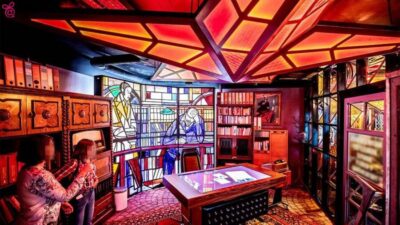
Communist History Tour with House of Terror Option
Read our review →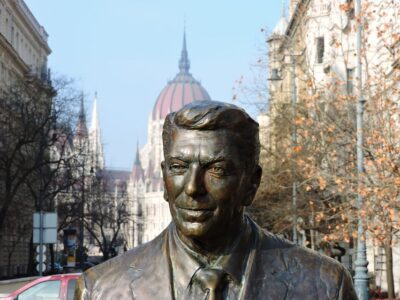
3-Hour Walking Tour About Communism (Small Group)
Read our review →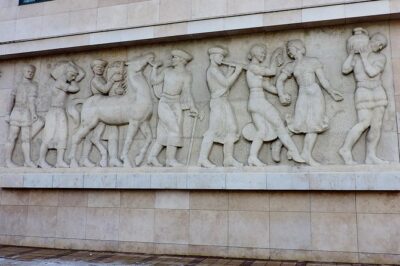
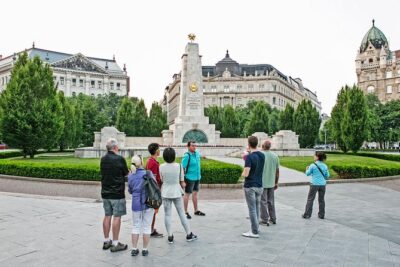
Lives of Hungarians Under Communist and Capitalist system
Read our review →
Private Budapest Hammer & Sickle Communist Times Tour
Read our review →
Browse the lists this tour appears in